

The rhythm of human life has always followed a familiar beat. Generation after generation, people wake up, make plans, bond, engage, and seek moments of happiness. When we live in the midst of it, everything seems personal and new, but these same patterns have shaped human days for as long as anyone can remember.
No matter where we look in history, the scenes are eerily familiar. Families gather together. Children grow up under watchful eyes. Illness strikes without warning. Celebrations mark life’s turning points. Daily work keeps the wheels turning. Ambition drives people toward influence, comfort, or wealth. Pride sparks arguments. Power struggles leave scars. Old grudges remain, while love emerges where no one expects it. People hope, grumble, compete, celebrate, and move on, even as time slowly erases the details of their world.
What remains of all the lives that once seemed so urgent and important? A room full of laughter. The heavy silence of a heated argument. The quiet satisfaction of a successful take. These moments seemed intense and lasting when they happened, but they are long gone. Civilizations have risen from this mixture of brilliance and imperfection, and then collapsed, leaving behind ruins and stories that themselves fade.
This awareness is not meant to crush us; it is meant to bring clarity. When the news is full of conflict, greed, or fleeting triumphs, it is in fact the echo of a story that humanity has told over and over again. The same instincts that fueled ancient conflicts are still active today. The same hopes that lifted spirits centuries ago still lift us. Seeing this pattern does not imprison us; it frees us from the illusion that our struggles and triumphs are entirely unique.
When this illusion is removed, our focus can shift to what really matters and is within our control: the character we build through repetition. Do we respond patiently or with frustration? With integrity or with complacency? With generosity or with resentment? Events repeat themselves throughout history, but where meaning is made is in our responses; right now.
History never repeats itself in exactly the same way, but its rhythm is quite recognizable. People fall in love. Children laugh and cry. Dreams rise and sometimes fall. Happiness appears, lingers, and then fades. The life that beats within us today will one day fade into the quiet background of the past. This truth does not diminish our significance, but rather makes it sharper and clearer. It reminds us to live consciously and to cherish the ordinary days while we have them.
By embracing this enduring rhythm, we honor not only our own finite time but also the long human story of which we are a part. The same things keep repeating themselves, but there is still room within them to add something meaningful: a moment of mutual understanding, a simple act of kindness, or a conscious choice to stay awake in our lives rather than simply floating through them.
Geography has this quiet way of shaping everything about our lives, more than we usually admit. Tim Marshall put it perfectly in Prisoners of Geography when he said, “Geography is the reason why we are where we are.” It’s such a straightforward line, but it hits hard once you really think about it. We like to believe our futures come down to hard work, smart decisions, and grit. Yet so much of the story is already written by the piece of earth we’re born onto: the mountains that cut people off, the rivers that make connection easy, and the heat or cold that decides what kind of life is even possible.
Picture those wide, bone-dry stretches of land where water has always been worth fighting over. The sun is merciless, the soil cracks, and what could have been green stays a dream. People there aren’t just dealing with drought; they’re dealing with everything that comes after it. Farming stays small and risky, so economies lean hard on oil or on dangerous trade corridors that everyone wants to control. Survival eats up so much energy that there’s rarely room left for big leaps forward. Resilience becomes the main skill everyone learns, not because they want to, but because they have to. Marshall points out how certain landscapes naturally pull groups apart, turning cooperation into something that feels almost impossible.
Then look at places like much of Europe or North America, where gentle rivers and reliable seasons made it easier for people to connect, trade, and build. The Rhine and the Mississippi weren’t just waterways; they were highways for ideas and prosperity. Geography there worked like a quiet partner instead of an opponent. But step into harsher regions, endless sand next to choke-point straits, or jagged mountains that hide valleys, and the land stops helping and starts pushing back. Scarcity turns neighbors into competitors. Outside powers notice the weak spots and press on them. Stability feels more like a temporary truce than anything solid. You can’t help wondering what those same people might have built if they’d started somewhere kinder.
None of this means we’re helpless. It’s not doom and gloom; it’s just honesty. People adapt brilliantly, think qanats carved thousands of years ago or desalination plants today. But even the cleverest fixes usually mean pouring huge effort into simply staying afloat, not into dreaming bigger. Technology is slowly loosening geography’s hold, letting us talk and work across oceans in seconds. Still, the physical map underneath doesn’t disappear.
When I think about all this, I feel more compassion than judgment. Some lives come with steeper hills right from the start, not because of who’s walking them, but because of the ground itself. Recognizing that doesn’t solve inequality, but it does make it easier to see people clearly and to care a little more about the ones on the roughest paths.

Wittgenstein’s short, enigmatic sentence always lingers in my mind:
“What can be shown, cannot be said.”
At first, it might seem overly philosophical or even absurd. Yet when we step away from the rarefied air of books and academia, the idea reveals itself as deeply human and utterly ordinary.
In everyday life, we constantly encounter things we grasp intuitively but struggle to explain: feelings, experiences, fleeting moments.
Consider longing. No matter how many words we string together, something essential remains missing.
Or think of a piece of music that suddenly shifts your mood. You feel its impact profoundly, but you cannot pinpoint exactly why.
The same happens when you enter a space—a home, a street, a mosque, or an empty room—and a specific atmosphere washes over you. That sensation defies verbal capture; it simply has to be experienced.
Wittgenstein reminds us that language, for all its power, has limits. Some meanings are larger than any sentence can contain.
They reveal themselves instead through behavior, silence, choices, and direct experience.
This explains why certain people speak volumes without uttering a word, why some artworks move us deeply without needing explanation, and why some decisions feel profoundly right even when logic cannot justify them.
The sentence gently urges us to accept that not everything requires verbal justification. We do not need to cram every meaning into words.
Some truths shrink when spoken.
Often, it is wiser to show: by living fully, by creating, by loving, or simply by staying silent.
Ultimately, the deepest layers of meaning unfold beyond the reach of sentences.

“In the end, the love you take is equal to the love you make.”
This line sounds simple, almost obvious, yet it lingers and unsettles the longer you reflect on it.
At first, it resembles karma with a gentler touch: give kindness and receive it in return; offer generosity and get it back. But life rarely works like a vending machine. You don’t always reap love from the same sources you sow it into. Sometimes you pour your heart into others who respond only with silence. Still, the line endures, just not as a straightforward transaction.
The love you “take” isn’t merely what others offer you. It’s what you become capable of noticing, accepting, and welcoming. If you navigate the world guarded, cynical, or emotionally closed, even genuine love can glance off you unnoticed. Conversely, when you actively make love through patience, curiosity, forgiveness, and effort, you expand your own capacity to receive it. You attune yourself to its frequency.
Making love doesn’t require grand gestures or endless self-sacrifice. It lives in the quiet, everyday choices: listening before reacting, showing up when it’s inconvenient, speaking honestly when it’s hard. These moments shape your character, and your character determines how much love you can truly absorb.
Ultimately, the line isn’t a guarantee of fair repayment from the world. It’s a reminder that love is a skill, a practice, and a way of being. What you carry forward isn’t a scorecard of what others gave you, but the richness of what you learned to give.
There’s something intriguing about how we react to words. Someone criticizes us, and almost instantly, a spark of heat rises inside: offense. It’s often automatic. Yet, if you examine it closely, true offense rarely stems from complete nonsense. If someone called you a purple alien, you’d likely laugh it off without a second thought. Why? Because you know it’s absurd and untrue. There’s no sting without a kernel of possibility.
But when words strike near an insecurity we harbor, a shadow we avoid facing, that’s when we flinch. Anger or defensiveness emerges like a protective shield. At its core, offense frequently acts as a mirror, reflecting the parts of ourselves we’d rather ignore.
This isn’t to say every critic is accurate. People often speak cruelly or ignorantly. However, if a comment triggers a reaction sharper than expected, pause and ask: Why does this bother me so deeply? What hidden nerve did it touch?
Admitting that the truths we deny most vehemently are often the closest to home can feel uncomfortable. Yet there’s profound power in this realization. Offense can serve as an invitation to reflect, uncover layers, and identify the real source of discomfort. Sometimes truth stings. Sometimes it frees us. Often, it’s both.
Next time your chest tightens and your mind rushes to defend, take a breath and sit with the feeling. What feels like an insult might actually be a truth gently knocking, waiting for you to open the door.

We live in an era where people prepare for everything except life itself. A time when everyone strives to excel in every field, yet masters none.
From childhood, we’ve been taught to “be prepared”: for school, university, work, and a future no one truly knows. With a reverent fear, we spent years crafting an image that seemed complete on the surface.
We sampled every skill, learned every detail, and explored every path. Not from passion, but from anxiety: the fear of falling behind, of being worthless, of vanishing in a crowd where everyone appears “successful.”
Now, amid this pile of experiences and polished résumés, a quiet but relentless inner voice emerges: “Who are you really? And what are you living for?”
Modern people are born facing a thousand directions but die without choosing one. They touch everything yet immerse in nothing. Instead of diving deep, they skim the surface. And no matter how broad that surface becomes, it remains shallow: rootless, restless, meaningless.
We prioritized knowing over being. We believed that a little knowledge of everything would make us stronger. But knowledge without identity is mere noise echoing in the mind, leading nowhere.
This world has shaped us into versatile beings: experts in everything, yet strangers to ourselves. Outwardly brimming with abilities, inwardly void of certainty. We know how to succeed, but not why we seek success. We know how to shine, but not in which light we belong.
The reason may be simple: we no longer listen to silence, solitude, or our inner world. The outer world constantly demands we become something, go somewhere, learn more, prove ourselves. Lost in that noise, we lose our own voice.
But a moment comes, perhaps at midnight, amid failure, or in the quiet of a dim library, when something inside declares: “Enough.” Enough of purposeless learning, directionless running, endless preparation for a meaningless future. That moment marks the start of awakening.
Awakening from the slumber of perpetual preparation, from the illusion of being ready for everything. Someone who aims to be ready for all is certain of nothing and remains forever halfway.
Perhaps the goal isn’t to prepare for the future, but to create one that is truly yours. Not the one others foresee or systems promise, but one that originates from within.
Depth means exactly that: not knowing everything, but understanding why. Why this path? Why this craft? Why this life? Without answers, you haven’t fully lived; you’ve merely gone along.
The world abounds with people skilled in everything yet alive in nothing. They know how to write but have nothing to say. They know how to build but lack purpose for it. They know how to win but not what victory means.
Those who pursue depth often seem foolish. Depth lacks speed and volume. It requires time, silence, and years without visible progress. Yet only from depth does true meaning emerge.
If you one day realize you know a bit of everything but are rooted in nothing, embrace it. This realization is the real start of your journey. Begin here: not to accumulate more knowledge, but to pursue what matters. Plant roots in what you truly believe, driven by inner conviction rather than fear, comparison, or the need for validation.
In the end, what endures isn’t the breadth of your résumé or skills list, but the truth you forged with your hands and touched with your soul.
We inhabit a world demanding readiness for “everything,” but true courage lies in declaring: “I’m ready only for what I believe in.”
Only then do we step beyond the performance and begin to live, not as players in endless roles, but as creators of our own meaning.
Perhaps the purpose of this long journey, growth, learning, and failure, is simply to recognize: we aren’t meant to be everything. We are meant to be ourselves. And that is enough.
Life is not always a smooth road. Most of the time it is full of rocks and bumps, full of moments when you feel like everything is weighing you down. But these difficulties are part of the story; part of what makes us who we are. If everything were to be simple and easy, no one would have the opportunity to grow.
Suffering is like a mirror that is held up in front of us. In those heavy moments, we see who we really are, how much we can stand, and how much we are willing to continue. Life tests us with all its pressure, but it is in the heart of those pressures that we find strength. Just like a seed that must break through its hard shell to become a sprout.
Sometimes despair comes to us and says that it is no use anymore, that you can no longer do it. But if we stay in the moment just a little longer, if we take just one more step forward, we will see that the hardship was not so endless. Life always seems to have something beyond the breaking point; a meaning, an opportunity, a new form of ourselves.
Creation always comes out of this darkness. He who has not suffered has nothing to create. Pain is raw material; we choose to build walls or bridges with it. We can be crushed under its pressure or, with the same pressure, build a new resilience within ourselves.
The truth is that life will remain difficult. There is no prescription that will make everything painless. But we can choose: whether to give up and stay where we are, or to embrace the pain and continue to build. Ultimately, the meaning of life is not in comfort, but in continuing.
Perhaps this is the great secret: life is difficult, but we have the power to be difficult. We are not made to run away, we are made to endure, to rebuild, to rise even when everything is destroyed. Difficulties are not the enemy, they are part of the path. And if we stand in their hearts, one day we will realize that they were what made us who we truly are.
There is a quote from Seneca that says: “Only time can heal what reason cannot.”
It’s a simple statement. But the more I think about it, the more truth it hides. It reminds us that there are certain wounds or difficult moments that logic cannot solve.
We always face difficulties and challenges. Usually in these situations, some of us get discouraged. But I want to talk about those people who don’t get discouraged. They say to themselves, “It wasn’t meant to be this way.” But does this quote really save us? Some of life’s challenges are beyond our logic. For example, when parents lose their child, they may know why, but is that knowledge enough to resolve the bad feeling? I don’t think so. This is where reason fails.
Time doesn’t bring reason. It doesn’t talk to us. It just passes. Like a river, it just passes. A river smoothes sharp stones over the years just by passing. Time will reset us. The pain will stay with us. We haven’t really solved the problem. We’ll just make peace with it.
Years later, those parents will grieve, but it won’t be all-consuming. That’s a favor that time does us. A favor that our brains can never do.
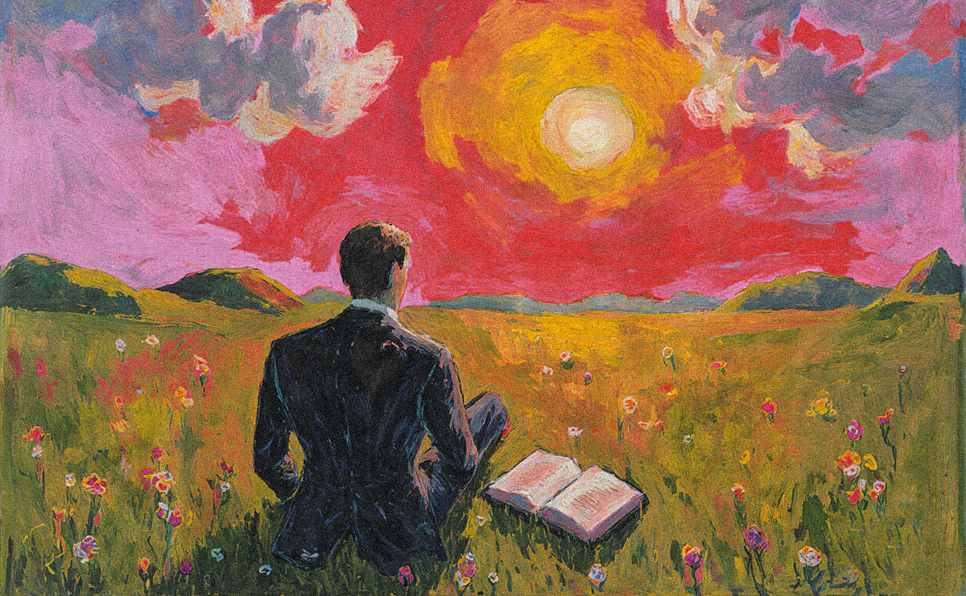
“Knowledge that is acquired under compulsion obtains no hold on the mind.”
– Plato
The more I think about this sentence, the more it becomes clear to me. Real learning (the kind that sticks in our minds) cannot be forced into our minds. It has to be something you want to know.
Right now, I and probably you don’t remember 90 percent of what we learned in school. Forced knowledge never works.
Real knowledge is valuable when it enters our brains, when we acquire it with curiosity. When you are curious and decide to learn something, it feels alive. The mind naturally wants meaning and wonder, not just raw facts.
A child who is fascinated by a butterfly flying or a cat did not become fascinated by these things because of their parents. It is the act itself, the real self of the thing that fascinates them. This is real learning. Playful, free, and unforgettable.
The system kills our curiosity. They tell us what we know and what we don’t know and when to stop asking questions.
We are now faced with an information bomb. Plenty of opportunities to learn anything we want. Knowledge should feel like freedom, not a prison.
Don’t learn because you have to. Learn because you want to.